Sixty-Six Historic Years of Temple Beth Solomon of the Deaf
Temple Beth Solomon of the Deaf (TBS) celebrates its 66th birthday this June. Its roots reach back to the late 1950s when some members of the Los Angeles Hebrew Association of the Deaf envisioned a place that would meet the needs of Deaf Jewish worshipers. Rose Zucker led that search mostly because she was looking for a place for her Deaf daughter, Helen, to get a Jewish education. Fortunately, Rabbi Solomon Kleinman of the Union of American Hebrew Congregations helped them see their dream become a reality.
Founded in Los Angeles in 1960, TBS holds a unique place in Jewish Deaf history as the first synagogue in the world created and owned by Deaf Jews to meet their religious and social needs. The world was a much different place technologically and socially in those days and because sign language was used, in-person meetings were imperative for communication to take place. The congregation soon became a cultural and spiritual hub where Deaf Jews and their families and friends could fully participate in Jewish life through a shared identity, American Sign Language, and community.
In our early years, services were held in spaces offered by other synagogues throughout the Los Angeles area and as the congregation moved from one host synagogue to another we became known as “the mobile congregation.” After six very busy years of fundraising, volunteer efforts, and donations, TBS purchased a synagogue in Arleta, California from Temple Beth Torah which was our home from 1966 until 2000. Temple Beth Solomon was named in honor of Rabbi Solomon Kleinman, whose vision and encouragement were instrumental in its creation. The idea of a synagogue that catered to the specific needs of the Deaf community represented a groundbreaking step toward accessibility and inclusion within Judaism. We began with 120 Charter Members; the membership increased as high as 400 at one point.
TBS quickly evolved into a center for Deaf life in Southern California. In addition to religious life, TBS opened its doors to the entire Deaf and hearing community as a meeting site, sponsored workshops, a senior citizen’s group, religious school, conferences, and weekly social events. Religious services incorporated sign language, interpreted prayers, a signing choir, and visual forms of worship making Judaism meaningful. Most Deaf Jewish children had a common memory of sitting with their parents in synagogue filled with hearing people, waiting impatiently for it to be over. Now, members were caught up in the excitement of creating their own place suited to their specific needs and you would hear the common phrase: “This is the only place where I can feel fully Deaf and fully Jewish at the same time.”
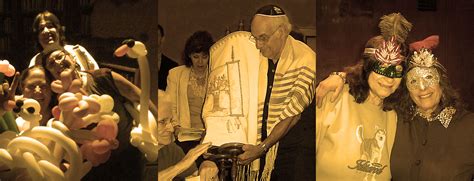
A beautiful feature of the synagogue was blending Deaf culture with ancient Jewish traditions. For example, during Rosh Hashanah services, worshipers experienced the sounding of the shofar through vibrations, sight, and communal participation. Signed music and prayers transformed worship into a highly visual spiritual experience. Sign language has Christian roots, so in 1995 TBS developed specific signs for Jewish concepts to better understand the difference in the philosophies of Judaism and Christianity thereby connecting more deeply to their Jewish traditions. A specific example of this is the word, “sin.” In Hebrew the word is “chet” which is an archery term. In Judaism a sin is a behavior that misses the mark. You tried to do the right thing but for whatever reason you missed. The TBS sign for sin reflects that meaning.
By the year 2000, our congregation was faced with overwhelming demographic challenges resulting in increasing financial pressures. An aging membership and new, exciting technology began to wear down our vitality and maintaining such a large property became difficult as our numbers declined. With giant leaps in technology, the need for a Deaf synagogue was not as relevant as it once was and mainstreaming into the hearing world had become more viable. So After 35 years in our Arleta home, TBS made the very difficult decision to sell its building and relocate. Temple Judea in Tarzana generously offered us space to continue operating while preserving our close-knit community and traditions. We stayed there for nine years until they began a massive renovation project on their campus. We then were offered space in Northridge and moved to Temple Ahavat Shalom where we still meet once a month.
In recent years, TBS has received recognition for its historical importance. All of our archives were accepted into the Special Collections Department of the library at California State University at Northridge. Articles in the Jewish press have highlighted our pioneering role in accessibility, Deaf culture, and inclusive worship. Today, Temple Beth Solomon of the Deaf stands as a testament to its perseverance and inclusion. Its history reflects the determination of Deaf Jews who refused to remain on the margins of religious life and instead built a family where communication, spirituality, and camaraderie could flourish.
Rose Zucker built a legacy that unfolded simply by her desire and resolve to find a place where her Deaf daughter could get a Jewish education. Sadly, she passed in 1986, but she and her efforts are celebrated annually and TBS remains an enduring symbol of Deaf Jewish life.
We welcome all those interested in joining our Shabbat services which are held monthly at Temple Ahavat Shalom in Northridge. You can contact us at [email protected] to inquire about dates. Check out our Facebook page at https://www.facebook.com/tbsdeaf

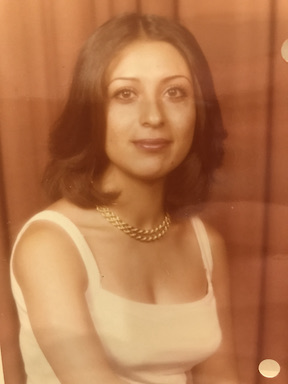

I have fond memories of Temple Beth Solomon of the Deaf . In circa 1985 I used to go there on Friday nights and teach Israeli Folk dancing after services, as a volunteer. I had a friend who was an ASL interpreter and she came with me. We used these gigantic speakers which I bought that vibrated the whole room. The deaf people could feel the vibrations and they had great rhythm. I loved going there. I did it for 3 or 4 years and I don’t remember why I stopped.
I never really knew the history of the synagogue , so thanks for the article.